Materials
James Hardie
Fiber cement siding — fire, pest & storm resistant
James Hardie
Est. 1888Fiber cement siding — fire, pest & storm resistant
Headquartered in Chicago, Illinois
James Hardie Industries has manufactured fiber cement building products for over 130 years, and today protects more than 10 million homes in North America. Fiber cement is a composite of cement, sand, and cellulose fibers — it looks like real wood but won't rot, warp, swell, or feed termites. Their HardieZone technology engineers siding for specific climates — the HZ10 product line is designed for high humidity, heat, and freeze-thaw cycles, making it ideal for Missouri homes. As a James Hardie certified installer, we install to the manufacturer's exact specifications so your full warranty is valid.
Why homeowners choose it
Dimensional curb appeal
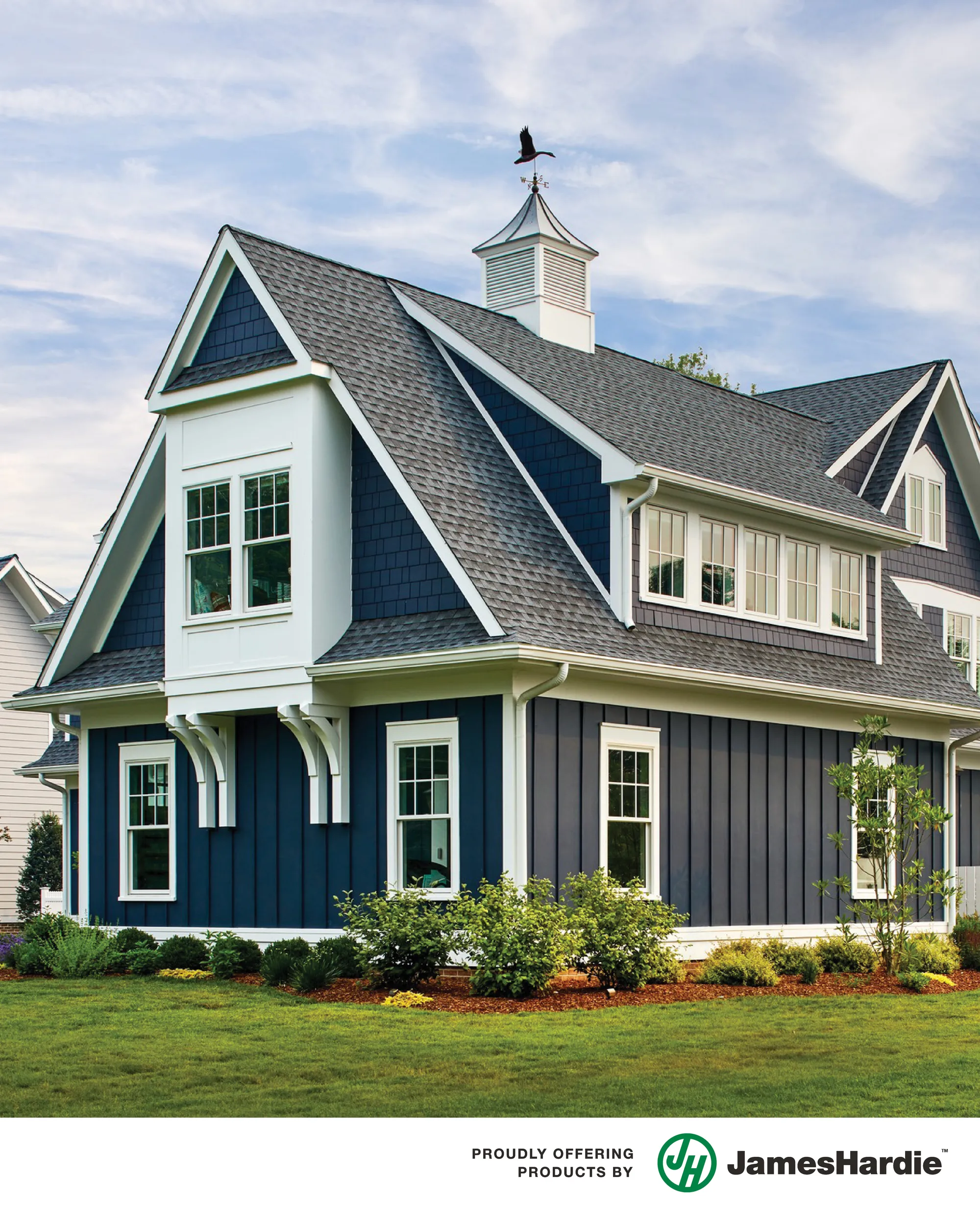
Thicker profiles, defined shadow lines, and wood-grain or smooth textures create an architectural finish that reads clearly from the street.
Climate-engineered
HardieZone® products are formulated by climate region, helping the siding manage the moisture, temperature swings, and seasonal weather found around St. Louis.
Non-combustible
Fiber cement does not ignite when exposed to direct flame and does not contribute fuel to a fire, unlike combustible wood products.
Stable in changing weather
Fiber cement resists the warping, swelling, and melting concerns associated with some wood and vinyl exteriors when installed with the required clearances.
Whole-home design
Lap, panel, shingle, trim, and soffit products allow one coordinated material family across traditional, Craftsman, farmhouse, and modern elevations.
Documented installation
Our process focuses on the nailing, flashing, joint, clearance, and finishing details that protect both the wall assembly and the manufacturer's warranty.
Product Lines
HardiePlank® Lap Siding
Most PopularThe flagship fiber cement lap siding with a cedar-look grain — the #1 selling brand of siding in America. Available in smooth or textured finish, in exposures from 4" to 10.75" to match any home style.
HardiePanel® Vertical Siding
ModernVertical panels for a clean, contemporary look — popular on modern and farmhouse-style homes. Combine with HardieTrim battens for a board-and-batten style.
HardieShingle® Siding
DesignerIndividual shingles that replicate natural cedar shakes — ideal for gables, accents, or whole-home applications. Straight-edge or staggered-edge panels available.
Hardie Artisan® Lap
PremiumThick 5/8-inch boards with deep shadow lines and a square groove channel — a high-end, architectural-grade profile for distinctive homes.
HardieTrim® Boards
FinishingEngineered trim boards for corners, fascia, frieze, and window wraps — cuts cleanly, holds paint beautifully, and resists moisture at the most exposed points of your home.
HardieSoffit® Panels
VentilationPre-cut soffit panels for eaves and overhangs — available vented or non-vented to keep attics breathing and moisture out.
Beyond the surface
A complete system
Long-term performance depends on the materials behind the visible roof or siding, plus careful installation at every opening, edge, and transition.
Drainage plane
A water-resistive barrier and properly integrated flashing create a continuous path for incidental moisture to drain behind the siding.
Opening protection
Windows, doors, meter blocks, hose bibs, vents, and lighting mounts receive planned flashing and trim rather than relying on caulk alone.
Required clearances
Spacing above roofs, decks, grade, steps, gutters, and horizontal flashing keeps fiber cement away from standing water and splashback.
Correct fastening
Fastener type, spacing, depth, and stud attachment are selected for the product and wall so boards remain secure without damaging their surface.
Joint and flashing details
Butt joints, horizontal transitions, roof lines, penetrations, and trim connections are completed to current James Hardie instructions.
Finish and sealant
Cut edges, field-painted surfaces, and required joints receive compatible coatings and sealants while designed drainage paths remain open.
Warranties
30-Year Non-Prorated Product Warranty
Covers manufacturing defects for 30 years with no proration — full replacement value throughout the warranty period. Transferable to the next homeowner, which adds real resale value.
15-Year Finish Warranty (Color Plus®)
Covers peeling, cracking, and chipping of the factory-applied Color Plus finish for 15 years — including both paint and labor.
Technology & Certifications
HardieZone® Technology
Products engineered for specific climate zones — HZ10 is designed for Missouri's humidity, heat, and freeze-thaw cycles, resisting moisture damage and warping.
Color Plus® Technology
Multiple coats of paint applied and baked in a controlled factory environment for a consistent, fade-resistant finish that outlasts field-applied paint by years.
Non-Combustible
Fiber cement will not ignite when exposed to flame and won't contribute fuel to a fire — approved for fire-rated construction in many jurisdictions, unlike vinyl which melts.
Pest & Rot Proof
Termites, carpenter ants, and woodpeckers can't damage fiber cement — and it won't rot or swell in Missouri's humid summers and wet winters.
Storm Resistant
Engineered to withstand hail, high winds, and flying debris — holds up through Midwest storm seasons far better than vinyl or wood.
Certified Installer
Installed by a James Hardie certified contractor following factory specifications — correct nailing, flashing, and clearances — with full warranty registration on every project.
Colors & Finishes
Statement Collection®
James Hardie's curated palette of the most popular Color Plus colors for our region — stocked locally for the fastest lead times on your project.
Dream Collection®
Over 700 made-to-order Color Plus colors — from crisp Arctic White to deep Evening Blue — so you can match any design vision.
Primed for Paint
Prefer a custom color? Primed boards arrive ready for your painter to finish on-site in any color you choose.
Mixed-material design
Lap siding can be paired with vertical panels, shingles, masonry, or contrasting trim to add depth without making the exterior feel busy.
Interactive design suite
See Hardie® siding on your home
Upload a photo of your house in the official Hardie™ Designer, then explore siding styles, materials, and ColorPlus® Technology colors before planning your project with Acute.
Common Questions
How does James Hardie compare to vinyl siding?
Hardie is about five times thicker than vinyl, won't melt in heat or crack in cold, and looks like real wood instead of plastic. Vinyl typically needs replacement in 20–30 years; Hardie carries a 30-year warranty and routinely lasts 50 years with basic care. It costs more up front but wins on lifespan, curb appeal, and resale value.
Does fiber cement siding need to be repainted?
With the factory Color Plus finish, expect 15+ years before repainting — backed by a 15-year finish warranty. Primed-and-field-painted boards typically need repainting every 7–10 years depending on paint quality and exposure.
How long does a James Hardie siding installation take?
Most single-family homes take one to two weeks depending on size, stories, and detail work like trim and soffits. We remove and dispose of the old siding, repair any sheathing damage we find, install a water-resistive barrier, then install and finish the Hardie system to factory spec.
Will James Hardie siding hold up to Missouri storms?
Yes — that's exactly what it's engineered for. The HZ10 formulation resists humidity-driven swelling and freeze-thaw cracking, and fiber cement shrugs off hail and wind-blown debris that would crack or puncture vinyl. It's also non-combustible and impervious to termites.
Why does certified installation matter?
James Hardie's warranty requires installation to their published specifications — correct fasteners, clearances, flashing, and joint treatment. Improper installation is the #1 cause of fiber cement problems. As a certified installer, we follow factory specs and register your warranty so it's fully valid.
What happens behind the new siding?
We inspect the sheathing, address visible damage, establish a properly lapped water-resistive barrier, and integrate window, door, roof, and wall flashings before the finish siding goes on. Those hidden details are critical to keeping the wall dry.
Can I combine lap siding with board and batten?
Yes. Many homes use lap siding on the main walls and HardiePanel with HardieTrim battens on gables or entries. We plan the transitions, trim proportions, and color balance so the materials look intentional together.
Ready to upgrade with James Hardie?
We'll help you choose the right James Hardie product for your home and budget — no pressure, no upsell.
Free, no-pressure estimate
Protect your home with trusted local experts.
Avoid the storm chasers. Get a reliable, high-quality roof backed by transparent pricing and hands-on service.